
i love you with all my heart
"Charlie" | "Keep Me Straight" |
"Harlequin" | "Mimosa" |
"Kelly"
| "Rosehill Dream"
|
"Just Good Fun"
| "Express Gift"
|
"Flo" | "Chouette" |
"Actress"
| "Santabless"
|

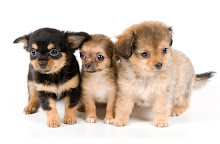
As with most domestic animals, puppies require extensive care, especially in their first few months. Vaccinations are very important within the first 3 months as the motherly antibodies from the initial breastmilk wear off. Vaccinations are often administered annually in the form of boosters, and - in some locales and for certain vaccinations - triannually. After the initial vaccination series (usually by 4–6 months), puppies who are immunized against common viruses will get confirmation from their veterinarian that it is safe to bring the puppy around other dogs. From this point, going outside the home for walks, trips to the park, to the petshop and so on can be very valuable. Training puppies on an individual basis and in a social setting is highly recommended, often starting at home immediately (even as early as 8 weeks of age) and continuing through formal training (around 6 months of age) in an obedience class or similar setting. A well trained puppy will ideally not soil in the home, be well-behaved around dogs and people of all kinds, will not chew furniture or other expensive and/or valuable items, and should respond to basic commands such as sit, lay down, off, no, drop, stay, heel, come and so on. Puppy food, found in dry, canned, raw and homemade forms, and often geared for certain breeds or types of dogs, should contain nutrients that allow puppies to develop strong bones, teeth, functional joints, a shiny coat, and a healthy immune system. Puppies often need to eat 2, 3 or even more times daily to accommodate their very fast metabolisms. Toys manufactured specifically for puppies may increase their ability to logically reason, and many chew toys also help ease the natural teething process. Proper care extends to the adult stages of life, beginning at 1 year of age.


Born after an average of 63 days of gestation, puppies emerge in an amnion that is bitten off and eaten by the mother dog. Puppies begin to nurse almost immediately. If the litter exceeds six puppies, particularly if one or more are obvious runts, human intervention in hand-feeding the stronger puppies is necessary to ensure that the runts get proper nourishment and attention from the mother. As they reach one month of age, puppies are gradually weaned and begin to eat solid food. The mother may regurgitate partially digested food for the puppies or might let them eat some of her solid food such as dog treats. By the age of about seven weeks, puppies no longer depend on nursing for food. Although they may continue trying to nurse, the mother dog usually refuses after this age, though she might let them occasionally nurse for comfort.
At first, puppies spend the large majority of their time sleeping and the rest feeding. They instinctively pile together into a heap, and become distressed if separated from physical contact with their littermates, by even a short distance.
Puppies are born with a fully functional sense of smell but can't open their eyes yet. During their first two weeks, a puppy's senses all develop rapidly. During this stage the nose is the primary sense organ used by puppies to find their mother's teats, and to locate their litter-mates, if they become separated by a short distance. Puppies open their eyes about nine to eleven days following birth. At first, their retinas are poorly developed and their vision is poor. Puppies are not able to see as well as adult dogs. In addition, puppies' ears remain sealed until about thirteen to seventeen days after birth, after which they respond more actively to sounds. While between two to four weeks old, puppies usually begin to growl, bite, wag their tails, and bark.
Puppies develop very quickly during their first three months, particularly after their eyes and ears open and they are no longer completely dependent on their mother. Their coordination and strength improve, they spar with their litter-mates, and begin to explore the world outside the nest. They play wrestling, chase, dominance, and tug-of-war games.
Puppies are highly social animals and spend most of their waking hours interacting with either their mother or littermates. Most people who are thought to be experts[who?] now believe that being with its mother and littermates until at least eight weeks old is important for a puppy's behavioral development. Responsible breeders will not sell a puppy that is younger than eight to twelve weeks old, and in some jurisdictions, it is illegal to give away puppies younger than a certain age (usually between eight and twelve weeks).
It is important that puppies are socialized with humans, particularly between the ages of eight and twelve weeks, so as to encourage healthy interaction and develop the puppy's social skills around people. Puppies ideally should be exposed to as wide a variety of friendly people as possible during this period. Dogs that do not receive adequate socialization during this sensitive period may display fearful behavior around humans or other dogs as adults.
The modern labrador's ancestors originated on the island of Newfoundland, now part of the province of Newfoundland and Labrador, Canada.[4] The breed emerged over time from the St. John's Water Dog, also an ancestor of the Newfoundland dog (to which the Labrador is closely related), through ad-hoc breedings by early settlers in the mid to late 16th century.[4] The original forebears of the St. John's dog are not known, but are likely a random-bred mix of English, Irish, and Portuguese working breeds. From the St. John's Dog, two breeds emerged; the larger was used for hauling, and evolved into the large and gentle Newfoundland dog, likely as a result of breeding with mastiffs brought to the island by the generations of Portuguese fishermen who had been fishing offshore since the 1600s. The smaller short-coat retrievers used for retrieval and pulling in nets from the water were the forebears of the English-bred Labrador Retriever. The white chest, feet, chin, and muzzle - known as tuxedo markings - characteristic of the St. John's Dog often appear in Lab mixes, and will occasionally manifest in Labs as a small white spot on the chest (known as a medallion) or stray white hairs on the feet or muzzle.
The St. John's area of Newfoundland was settled mainly by the English and Irish. Local fishermen originally used the St. John's dog to assist in bringing nets to shore; the dog would grab the floating corks on the ends of the nets and pull them to shore. A number of these were brought back to the Poole area of England in the early 1800s,[4] then the hub of the Newfoundland fishing trade, by the gentry, and became prized as sporting and waterfowl hunting dogs.[4] A few kennels breeding these grew up in England; at the same time a combination of sheep protection policy (Newfoundland) and rabies quarantine (England) led to their gradual demise in their country of origin.[5]
The first and second Earls of Malmesbury, who bred for duck shooting on his estate,[6] and the 5th and 6th Dukes of Buccleuch, and youngest son Lord George William Montagu-Douglas-Scott,[6]were instrumental in developing and establishing the modern Labrador breed in nineteenth century England. The dogs Avon ("Buccleuch Avon") and Ned given by Malmesbury to assist the Duke of Buccleuch's breeding program in the 1880s are usually considered the ancestors of all modern Labradors.[7]


 The modern labrador's ancestors originated on the island of Newfoundland, now part of the province of Newfoundland and Labrador, Canada.[4] The breed emerged over time from the St. John's Water Dog, also an ancestor of the Newfoundland dog (to which the Labrador is closely related), through ad-hoc breedings by early settlers in the mid to late 16th century.[4] The original forebears of the St. John's dog are not known, but are likely a random-bred mix of English, Irish, and Portuguese working breeds. From the St. John's Dog, two breeds emerged; the larger was used for hauling, and evolved into the large and gentle Newfoundland dog, likely as a result of breeding with mastiffs brought to the island by the generations of Portuguese fishermen who had been fishing offshore since the 1600s. The smaller short-coat retrievers used for retrieval and pulling in nets from the water were the forebears of the English-bred Labrador Retriever. The white chest, feet, chin, and muzzle - known as tuxedo markings - characteristic of the St. John's Dog often appear in Lab mixes, and will occasionally manifest in Labs as a small white spot on the chest (known as a medallion) or stray white hairs on the feet or muzzle.
The St. John's area of Newfoundland was settled mainly by the English and Irish. Local fishermen originally used the St. John's dog to assist in bringing nets to shore; the dog would grab the floating corks on the ends of the nets and pull them to shore. A number of these were brought back to the Poole area of England in the early 1800s,[4] then the hub of the Newfoundland fishing trade, by the gentry, and became prized as sporting and waterfowl hunting dogs.[4] A few kennels breeding these grew up in England; at the same time a combination of sheep protection policy (Newfoundland) and rabies quarantine (England) led to their gradual demise in their country of origin.[5]
The first and second Earls of Malmesbury, who bred for duck shooting on his estate,[6] and the 5th and 6th Dukes of Buccleuch, and youngest son Lord George William Montagu-Douglas-Scott,[6]were instrumental in developing and establishing the modern Labrador breed in nineteenth century England. The dogs Avon ("Buccleuch Avon") and Ned given by Malmesbury to assist the Duke of Buccleuch's breeding program in the 1880s are usually considered the ancestors of all modern Labradors.[7]


.png)